Showing posts with label Random Thoughts. Show all posts

Saturday, December 31, 2016

What I've Read/Listened To In 2016

I've done this in the past, and after reading Stuart McMillian's list, I thought it would be nice to jot down some of the books, podcasts, research I've really enjoyed in 2016. 

Hope you enjoy!


Books

Planned For 2017
I have the following books laying around and haven't gotten around to them yet or they are on my Amazon wishlist.  


Podcasts

  • Elite Performance Podcast - Us at BBA! (Selfish Plug :) 
  • Perception & Action Podcast - Rob Gray
  • The EntrelLeadership Podcast - Ken Coleman
  • Historic Performance Podcast - James Darly
  • Ted Radio Hour
  • Tell Me Something I Don't Know - Stephen Dubner

Top Research

  • Van Hooren, B., & Bosch, F. (2016). Influence of Muscle Slack on High-Intensity Sport Performance: A Review. Strength & Conditioning Journal38(5), 75-87.
  • Nimphius, S., Callaghan, S. J., Sptieri, T., & Lockie, R. G. (2016). Change of direction deficit: A more isolated measure of change of direction performance than total 505 time. J. Strength Cond. Res.
  • Rumpf, M. C., Lockie, R. G., Cronin, J. B., & Jalilvand, F. (2016). Effect of Different Sprint Training Methods on Sprint Performance Over Various Distances: A Brief Review. The Journal of Strength & Conditioning Research30(6), 1767-1785.
  • Petrakos, G., Morin, J. B., & Egan, B. (2016). Resisted Sled Sprint Training to Improve Sprint Performance: A Systematic Review. Sports Medicine46(3), 381-400.
  • Morin, J. B., & Samozino, P. (2016). Interpreting Power-Force-Velocity Profiles for Individualized and Specific Training. International Journal of Sports Physiology & Performance11(2).
  • ​Gabbett, T. J. (2016). The training—injury prevention paradox: should athletes be training smarter and harder?. British journal of sports medicine,50(5), 273-280.
  • Rhea, M. R., Kenn, J. G., Peterson, M. D., Massey, D., Simão, R., Marin, P. J., ... & Krein, D. (2016). Joint-Angle Specific Strength Adaptations Influence Improvements in Power in Highly Trained Athletes. Human Movement17(1), 43-49.
  • de Hoyo, M., Sañudo, B., Carrasco, L., Mateo-Cortes, J., Domínguez-Cobo, S., Fernandes, O., ... & Gonzalo-Skok, O. (2016). Effects of 10-week eccentric overload training on kinetic parameters during change of direction in football players. Journal of sports sciences34(14), 1380-1387.
  • de Hoyo, M., Gonzalo-Skok, O., Sañudo, B., Carrascal, C., Plaza-Armas, J. R., Camacho-Candil, F., & Otero-Esquina, C. (2016). Comparative Effects of In-Season Full-Back Squat, Resisted Sprint Training, and Plyometric Training on Explosive Performance in U-19 Elite Soccer Players. The Journal of Strength & Conditioning Research30(2), 368-377.
  • ​Van Hooren, B., & Bosch, F. (2016). Is there really an eccentric action of the hamstrings during the swing phase of high-speed running? part I: A critical review of the literature. Journal of Sports Sciences, 1-9.
  • Van Hooren, B., & Bosch, F. (2016). Is there really an eccentric action of the hamstrings during the swing phase of high-speed running? Part II: Implications for exercise. Journal of Sports Sciences, 1-12.
  • Hausler, J., Halaki, M., & Orr, R. (2016). Application of Global Positioning System and Microsensor Technology in Competitive Rugby League Match-Play: A Systematic Review and Meta-analysis. Sports Medicine46(4), 559-588.
  • Lamela, D., Sachandani, K., Hubble, K., & Keenan, K. (2015). MEASUREMENT OF LEVEL OF BRANCHED CHAIN AMINO ACIDS IN NUTRITIONAL SUPPLEMENTS. The FASEB Journal29(1 Supplement), 559-25.

Wednesday, August 10, 2016

Cupping and Other Olympic Shenanigans

The Olympics are awesome, I mean truly incredible, but every four years the Olympics brings with it pseudoscience and pseudo-performance enhancements that the TV announcers/networks love to exploit.

I mean we still hear announcers talk about getting rid of lactic acid, and that myth has been long debunked.

In the Olympics, winners and losers are literally separated by hundreds of seconds; minuscule differences can be the difference between gold and not-placing, so athletes will do ANYTHING to gain a slight edge, whether that means using evidence-based practices or not.

This means the Olympics are home to pseudoscience techniques "designed" to gain that extra edge for Olympic Gold performance. Four years ago in the London Olympics, it was kinesiotape (hint hint - not an effective treatment of pain (3)); this year it's cupping (see picture below).

Photo Credit: www.people.com
Photo Credit: turnthere.blogspot.com

So what is cupping?

Cupping was used thousands of years ago in ancient china (may not be true), and in today's modern use, it is basically a suction cup designed to increase blood flow, remove toxins, and enhance recovery to selected body parts.

Just watch the swimming portion of the Olympics and you'll be sure to see some "info" on cupping - usually lacking any actual evidential statements. At least USA Today did some decent investigative journalism, debunking the whole cupping thing.

One thing the media continues to promote is the "fact" that cupping was used in ancient chinese medicine, so it HAS to be legit…right?

I still can't see how this is a reason to do cupping… I see it as more of a reason NOT to do cupping.

How is the "fact" that something was used thousands of years ago, a good reason to use it now?
If we used many of the practices from thousands of years ago, where would we be?
Heck, if we used some of the sports performance/sport medicine practices from a couple of centuries ago, many would laugh.
So let's not use this as a reason for it's use.

Now, if we look at the actual literature on cupping, we find a very uncompelling story. In fact, a meta-analysis reviewed all randomize controlled-trials (RCTs) and found that while cupping may be a beneficial treatment for herpes zoster and other specific conditions, it's efficacy as a treatment for pain or for enhanced performance are unfounded (1).

Basically, a systematic review of all cupping studies show two things. 
  1. The effectiveness for cupping in a sporting environment has not been found.  It is NOT an effective treatment for pain or performance and elicits NO physiological benefits for an athlete.  The athlete may receive psychological benefit (aka placebo), but actual positive physiological responses are unfounded. 
  2. The few studies showing benefit of cupping have come from China, which have been known to have extreme bias and un-reliable results, not to mention the actual studies are very spotty (2)
If we actually think about cupping, physiologically, we can understand why it may be a poor modality choice.  

First, why would we want to place an extreme form of stress upon the athlete? Cupping damages the surrounding tissues, which is NOT something we'd want for an athlete looking for acute recovery.  

For an event such as the Olympics, where recovery from day to day is imperative - we want to preserve tissue health and restore parasympathetic nervous system function… NOT provoke it, which cupping very well can.  

As for myself, I've gone through cupping, and it is not comfortable, not relaxing, and can leave burning/sensitive skin for sometime after.  

Light massage, contrast baths, traction, meditation, light ART or joint manipulations, that won't stress the CNS or surrounding tissues, are all better options.  

Not to mention the BEST recovery and performance modalities in the tool kit are... 

SLEEP, NUTRITION, & HYDRATION.  

Yes, I know, not very sexy, not article worthy, no network specials here...but it's the truth. 

At the end of the day, although compelling, we know sports celebrities are poor sources of reliable performance information, and just because Michael Phelps (cupping) or Kerri Walsh Jennings (Kinesiotape) use a certain modality doesn't mean it has any efficacy. 

Sure, Phelps may receive some psychological and mental benefit from cupping - which is fine and dandy - most athletes have some form of ritual or superstition they use as a placebo for performance, but I'd wish networks and broadcasters would give a "warning" to those watching at home that these methods are unsupported and to ONLY perform under an experienced practitioner. 

This herein lies the problem I have with these types of things - cupping, kinesiotape - is now every HS and college Joe Schmo will want to get cupping treatment.  

We saw the response with Kinesiotape from the last Olympics - You can now see it at every youth, HS, and college sporting event - being applied by un-qualified practitioners, sometimes even by the athlete themselves.  

We will now see it with cupping, and the problems is not necessarily the fact that cupping lacks efficacy, it's in the fact that cupping, done by unqualified practitioners can, in fact, be harmful.  Left on too long, used with too much heat, done on those with sensitive skin - and you'll see irritations, rashes, infections, bleeding, etc.  

Not to mention you can get cupping kits on on Amazon for ~$20.  So now, stupid athletes and parents will by applying cupping, expecting to be like Michael Phelps, only left to be disappointed. 

Also, here's what can happen when cupping goes wrong…

Photo Credit: (nextshark.com)

So while, cupping may help Phelps gain a psychological edge on his competition, let it be known it does not provide a physiological benefit.  Also note that he has WORLD CLASS sports medicine and practitioners applying this method. 

I just wish networks and broadcasters would take some responsibility on this front, and not continue to promote such methods, and for once get out of the "Olympic Cinderella" mode and not try to make a fairly tale story out of every thing at the Olympics.

As for you athletes out there - please heed HEAVY hesitation before deciding to get a cupping treatment.  Save your money, and instead invest it in your sleep, nutrition, hydration, and a good foam roller (which has as much efficacy as cupping, but it's not as sexy).

Go Get 'Em!


References:

1. Cao, H., Li, X., & Liu, J. (2012). An updated review of the efficacy of cupping therapy. PLoS One, 7(2), e31793.

2. Lee, M. S., Kim, J. I., & Ernst, E. (2011). Is cupping an effective treatment? An overview of systematic reviews. Journal of acupuncture and meridian studies, 4(1), 1-4.

3. Parreira, P. D. C. S., Costa, L. D. C. M., Junior, L. C. H., Lopes, A. D., & Costa, L. O. P. (2014). Current evidence does not support the use of Kinesio Taping in clinical practice: a systematic review. Journal of physiotherapy, 60(1), 31-39.

Monday, June 6, 2016

Random Thoughts

I keep a journal of notes in my phone, by my bedside, and in a word document on my computer.  Here's where I'll dump all of those ideas into an incoherent lists of things floating around my head.

  • Science confirms, good ideas happen when you are mentally switched off. Taking a vacation, taking time off, sleep, and procrastinating can help in solving complex problems
  • Everybody should be taking naps, I think schools should even promote 30-minutes to a midday nap.  The research is clear on this topic as well, if you want to live longer, be more creative, receive a burst of energy/focus, improve performance - then NAP!
  • Add stress or other cognitive function during decision making to enhance sporting performance: Like performing math equations, memorizing colors/patterns, watching something, listening to something, or any kind of mental processing while performing a task may enhance motor learning.
  • 1000 good reps cannot undo the work of 100 bad reps.  Start doing things correctly, don't wait for breakdown
  • S&C coaches need to voice input and feedback of basic physiological truths to sport coaches when it comes to practice, structuring, intensities, and nervous system optimization.  For example, a normal football practice week should really look like the top chart - and not the bottom chart, which is the traditional method in the football world


  • All athletes seek autonomy, competence and connection.  Does your program provide these things?
    • Autonomy is the need to be free to choose your own goals and do things because you like doing them for their own sake. Autonomy is the freedom to set your own goals, choose your own path and not feel pressured by other people or outside forces.
    • Competence is being good at what you’re doing and feeling confident in your abilities to perform the task at hand. We all want to feel like we are learning, increasing our skill and growing. This basic need for competence and pursuit of mastery drives us, and makes us feel good when we achieve a difficult goal.
    • Connection is the desire to bond with and relate to other people. Goals that have you interacting with others, giving and receiving help from others and nurturing relationships are going to fill your innate need for connection.
  • Some of the most important things we can do as coaches and parents is let kids figure things out on their own.  This means if there is a dispute in grades, or playing time, or social aspects - the kid should figure them out - don't step in and try to solve the problem - this isn't benefitting anyone
  • Nutrition is emotional.  The more I think and work on nutritional things, the more I see a need to address emotional ties to eating habits and decisions - not just plain x's and o's of nutrient breakdowns
  • It's combine season for many of our HS athletes, so we thought we'd throw together a video on the most important part of the 40-yard dash - the stance and start


  • Athlete training needs to be individualized - especially the higher the level of the athlete.  Think about this - if you give a group of 10 athletes the same program - why do 3 get a ton better, 4 get a little bit better, and 3 see no change?   
    • Many fast-twitched athletes (think corvettes) need much LESS work, while less genetically gifted (think pintos) may thrive on more work
  • Check out this FREE Human Behavioral Biology Course from Stanford Professor Robert Sapolsky.  Seriously this is a FREE course from Stanford University - ARE YOU KIDDING ME!


  • Sometimes we need to step back and let athletes and the human body do what it wants to do.  Often times coaches step in and make corrections on things that don't look correct.  For example, the false step - often times coaches try to rid athletes of this movement, but in actuality it's the bodies natural response more effective than not using one.  We aren't smarter than the human body.
  • When programming for your athletes - do you take into account what style of play their team is?  If I'm training a football player that plays in a "spread offense" with a play every 20-seconds, this is much different than a player in a "pro style" offense where they may use the whole play clock.  This not only changes the energy system demands of the athlete, but also the total volume and in some cases the intensity of work done by the athletes.  The same could be said for other team sports like basketball, soccer, football, lacrosse, rugby, hockey.  So do your homework, talk to the athlete, call the coach, watch a game and find out what style of play the team emphasizes. 

Go Get 'Em!

Tuesday, May 17, 2016

Owning A Gym: Things You Should Know

Within 20-miles of my gym, there are 4 Colleges with exercise science programs.  Every semester we go to 3-4 of these schools and talk to students about the S&C profession.  Add in every 4-months we bring in a batch of new interns, and this all equals to us working and talking with a ton of ambitious college kids looking to get into the field of S&C.

One of the first questions I always ask when talking with the young professionals is what is your dream job?

A common response is to own my own gym.

When I hear this I can't help but think - NO…NO You Don't!

Last week marked our 2-year anniversary in our current facility and closing in on 3-years total in business.

It's been a hell of a ride, and owning your own facility definitely has it's perks, but let this be clear - IT'S NOT FOR EVERYONE.  Being even more honest - It's not of most.

I think people want to own their own gym because it sounds cool and or because they love to train.

These are both poor reasons and probably a reason most of the gyms fail within the first 2-3 years. People make emotional and irrational decisions to open a gym rather than educated and dedicated ones. Let this be clear, if you want to own a gym, your own personal fitness will DECREASE! Your training will suffer, so please PLEASE don't try to open a gym because it will allow you to have your own personal space to train.

Owning a gym, to put it simply, is a pain in the ass!  There are so many hidden or small things that go into a business that you'll never be prepared for.  All of these things add up, and if you're in it for the wrong reasons, it will eat you up.

If you're not in it for the love of coaching, a passion for the intricacies of S&C, and because you truly/deeply care about the athletes - then you're in it for the wrong reasons.  If you think you're going to get rich or because you get your own personal training space or because you get to be your own boss - you're in for a rude awakening.

After sitting down and thinking back on these past years, here are some things that came to mind - in no specific order.


1. A Gym Is EXPENSIVE

If you're en employee or work in the public sector (HS/College/Pro), if something breaks, no big deal, they'll order another one.  Well when you own your own gym and something breaks, guess who pays for it - that's right, YOU do.

Sometimes at the end of the month it comes down to paying yourself or buying a piece of equipment.  Which do you choose?

While you've probably gone most of your life enjoying the benefits of having a HS or college gym to train in - Did you know a quality bar and set of bumper plates can be a thousand dollars!  Yup, a bar and 230lbs of weight, which is enough for just 1-ATHLETE can cost about 3/4 of my monthly rent.

Let's look at some other "small" expenses
  • You want 1000sq/ft of rubber matting? There goes roughly 2-4k
  • You want 3 quality squat racks?  Chalk up another 3-5k
  • Dumbbells from 0-100lbs?  Dig deep for 2-3k
  • Liability Insurance?  An annual rate of 1-2k a year
  • Credit Cards? Most credit card outlets take a 1-3% cut.  If you take in 50k in credit card charges a year, that's $500-1500 LOST just by accepting credit cards.
  • Typical steel plates cost about $1/lb
  • How about a nice sign outside the gym? - Don't worry it's only about 1-3k and as I suggest to many - IT'S WORTHLESS!
This doesn't even include what rent, utilities, and internet costs.  So when you bitch about a gym not having some sort of equipment - just know the owner has sacrificed beyond belief to just keep the lights on and them taking $500 out of their own pocket wasn't worth your much needed piece of equipment. 

Oh and on that note - don't expect to make money the 1st month, or 1st 3-months, or even 1st year.  Everyone thinks you'll open your doors and people will come poring in… sorry it doesn't happen like that.  You'll have to hustle for every client, every dime, and use every waking hour to improve some aspect of your business in order to survive.  Which leads to #2


2. How Much Do You Value Your Social Life?

When your the sole proprioter, you are the business and every waking second is spent working or thinking about your business.  Here is a small list of things I had to give up or at least heavily reduce when I opened my gym
  • Going out on Thursday, Friday, and Saturday nights - I either have work early the next morning or I'm just too tired to go out.  I know people who could NEVER sacrifice a Saturday night for doing 2-hours worth of programs instead of downing beers downtown. 
  • Football on Sundays … Nope work from 1-6pm.  And this isn't just NFL, but any sporting event.  I'm usually working during these hours while most others are at home enjoying the game
  • Buddies going golfing or hanging out on a random afternoon or night - My busy hours are from 2-9pm - so while others are getting off work and getting to do things, I'm in the midst of my busy time.
  • Saturday Morning Farmer's Market - One of the things I miss most is getting to go to the farmer's market on Saturday mornings.  It's just one of the many small things I miss out on due to owning this business. 

3. You'll Meet A Ton Of Great People

Over the past 3-years I've been fortunate to meet a ton of great people, athletes, and families who have bought into what we do.  I've met people with amazing stories, personalities, and have had a ton of fun getting to know people of various ages and backgrounds.  

That's the beauty of this job.  I love my athletes and it's a joy seeing them get better each and everyday and seeing them grow and develop.  They drive me nuts from time to time, but at the end of the day it's the people that make this job great!

4. Advice

People love to give you advice, especially when you're a young business owner.
  
"You should try this, you should buy that, have you thought about doing this, you would could do a lot of things if you did this" 

While these are all well intentioned, it seems everybody has a better feel for what your business needs than you do.  And this is without spending more than 10-minutes in your facility!  

Don't get me wrong, sometimes there is a decent idea in there, but 99% of the suggestions you've already thought of, planned logistics, looked at your books/financials, and decided it wasn't a good business move.  Learn to take these in stride and be respectful and thankful for their advice.  


5. You'll Be Sleep Deprived & No Body Cares

For the past 3-years, my alarm is set at 4:45am every weekday morning, and I usually don't get home until 8:30-9pm every night - and guess what - NO BODY CARES!

One thing I tell my interns at the start of every internship is once you walk through our doors, you drop all your other baggage and don't let it carry over to the gym floor.

No one cares if you're only getting 5-hours of sleep.  No one cares you work 7-days a week.  No one cares if you're having relationship problems, illness in your family, social stresses, or anything else - when it's time to coach - you need to be on.

We're in the service industry - we provide a service to our athletes and everybody wants special service.  Parents or athletes don't care you've already coached 8-sessions today or that you train 100+ other athletes - the only thing that matters is them.

They want special attention for their kid, extra work on nutrition, focused attention to develop mental toughness, help them with getting their school grades up, talk to them about weight management, address behavioral problems, etc.

Don't get me wrong, I am humbled that many ask these things from me and think highly enough of me to ask help in these things, but no one cares you get hundreds of other requests as well, they just need it to get done.  As a S&C coach you're not just a coach, but also a nutritionist, psychologist, counselor, therapist, tutor, mentor, etc.  I use all these terms loosely, but it's true.

I remember early on in this business, I missed a morning training session to host a camp.  I had an assistant run my morning sessions, and I got a call from a parent asking why I wasn't there.  Here I was out trying to expand and extend my business and I miss one morning and I get called asking where I'm at and why I'm not there.  If you're the business, expect people to want YOU.


6. You're Not Just The Owner

It's awesome to say I own a business and hopefully down the road that will bring some added perks and freedoms.  But as a young business owner - that's only a TINY fraction of my job.

Here's a list of other jobs that fall on my shoulders
  • Someone decides to hold in a huge dump all day just to unload it in your toilet - Guess who gets to unclog and clean the toilet - That's right, the owner!
  • Secretary - Answer and return anywhere from 5-10 emails/calls a day (This can take HOURS)
  • Keep spreadsheets of incomes vs expenses
  • Track receipts - I mean every receipt of everything you buy
  • Log miles on your car -  Every mile you drive for business needs to be tracked - yes every mile! 
  • Daily vacuuming, cleaning, maintenance - Approx. 30-60minutes a day
  • Living in the Midwest means winter, which means shoveling and salting at 4:30am before morning sessions.
  • Individual programming for hundreds of athletes - Each night I have around 2-10 programs to make.  Each program probably takes around 15-minutes - you do the math. 
  • Marketing, Advertising, Managing Social Media, Newsletter 
Also when you are the owner in a service business - you ARE the business.  No matter the issue, problem, or assignment - it's your job to address it.

When you own your own business, you don't have PTO, or built in vacation, or sick days, or weekends.   You don't get a 401K or IRA's or health insurance or any other built-in programs that you normally get as an employee.  It's been almost 3-years owing this business and I haven't missed more than 3-days in a row of work.  I haven't taken a sick day or personal day.  If I've missed a day at the gym, it's been to travel to a conference, speak at a conference, or attend a family function.  It truly is a 7day/week job that never quits.  Get used to being tired, sleep deprived, and worn down - or don't get into this.


7. Be Yourself and Stick To Your Principles

As a young coach, I wanted to be like some of the big names/coaches in the industry.  I tried hard to emulate them, program like them, talk like them, etc.  But I've now reached a point where I'm comfortable with myself and who I am.  

I still pull things from coaches but at the end of the day - I'm still me and my coaching should emulate that.  I like to have fun, I goof around, I allow my athletes freedom, and I know my strengths and I stick to them.  

Is my programming perfect?  No
Is my coaching perfect?  No
But what I've created over the past 3-years is special and when I take a step back and look at what BBA means to many athletes or the environment we've created - it truly is a special place.

8. People Will Want A Piece of You

A month doesn't go by where I'm not being asked to donate to something, be willing to help with this, or sponsor that, or if I have a job available.  In a given year, I donate between 3-6k to fundraisers, tournaments, charities, etc.  

This is great and I'm all for giving back to the community in whatever manner possible, but as a small  business, every cent matters.  I'm not a big corporation where giving away a thousand dollars is pocket change.  Like I said earlier, this very well may be a months income.  I will continue to donate items to charities and fundraisers because they are usually for great causes and it's important to me to give back.

I will say this though, the one thing I've stop doing is donating to sponsor a tournament or club or game or event.  Such as, "Donate $300 and we'll put your business on our t-shirts or in our program or on a banner".

Here's the brutal truth, rarely are any of these actually good business moves.  I've never been to an event, looked at the t-shirt or a banner and thought, "I really need to check out that business".  Again, I will donate memberships or consultations, but I've stopped giving actual money in return for a sign or name in a program.  These are mostly financial losses.  Which brings me to my next point...


9. Learn To Say No

Early on, I said yes to every opportunity I could get.

Extra sessions on Sunday?  Yes!
Extra 5am Session?  Yes!
Sponsor This Event? Yes!
Do 1-on-1 training during my only hour off during a 14-hour day? Yes!
Work this camp for dirt cheap, but it allows you to get in front of new athletes? Yes!
Do the S&C for a college team for a resume builder? Yes!

Now, I've learned to say no.  Keeping my sanity and getting freedom is much more important than doing these little things to help the business.

After 2-years of working 7-days a week, I finally said no to Sundays.  After almost 3-years of 5am Monday-Friday, I've said no to Thursdays.  I've turned down 1-on-1 sessions, reduced sessions, and turned away opportunities that limit my time and freedom to relax, read, research, or spend time with my family.

10. I Get To Be My Own Boss

While I've stated all the hidden costs of being your own boss and on the outside it's a lot less glamorous than it sounds; at the same time it has it's perks.  

I turn 28 in a week, and for over 3-years I've been able to program for every single athlete I've come in contact with.  THAT IS HUGE!

If I want to try this or that… I can do it.  If I want to buy this or that… I can do it.  If I want to change this or that… I can do it.  If I don't want to do this or that… I don't have to.

If I want to experiment with a new program or exercise - I have the green light.  If I want to drop that day's training and have a competition/game day - I'm going to do it.  If I want to conduct a research project on my athletes - I don't have any hoops to jump through except for my own.  

I have friends in the college setting who are full-time coaches and they don't get to do any programming and training structure - they just implement what the Head S&C programs.  Not only exercise prescription but also warm-up, speed and agility work, recovery, rehab and return to training, youth, HS, college teams, professional, adults, males, females, every sport imaginable are all under this umbrella.  

NO and I mean NO HS or College or Professional S&C coach has this kind of experience.  Most public sector S&C coaches typically have 1-5 sports or specific genders or specific ages - while I get a little bit of everything.  I can tell you this has made me a 100x better coach than if I was strictly say a College FB S&C coach.  

I get to dress is sweats and a sweatshirt EVERY SINGLE DAY!  If I had to dress up or wear slacks to work everyday, I would go insane!

I get rewarded for doing a great job!  If I do a great job with an athlete or client, they'll usually tell someone and I get rewarded - financially.  In the public sector S&C coaches are often underpaid or have set salaries that can be very hard to increase, no matter how well of a job you may be doing.  I, on the other hand, have unlimited potential for growth and my salary is only dictated by the quality of my program.  I'd venture to say I earn more than 80% of S&C coaches through BBA, online training, team contracts, and our products - but this comes with the fact that I also work more than 100% of public sector S&C coaches.  I'm lucky not to have these restrictions while most public settings and/or if you're an employee DO have these restrictions. 

I get bring this little boy to work everyday, which is a must!  Everyday is bring your pet to work day = awesome!


Go Get 'Em!

Tuesday, September 30, 2014

3 Things Athletes Can Learn From Derek Jeter

This is awesome!  Sign-up for more BBA updates right over here  ------------------------->

In case you've been living under a rock this past week, you've heard Derek Jeter retired from the game of baseball.  Arguably one of the greatest baseball players of all-time on the best franchise in the history of the MLB.

What's stood out even more than his illustrious career, is him as a person.  Jeter has played in the league for 20-years and is considered one of the greatest leaders and class acts in the game.  Everybody who has known Jeter has nothing but great things to say about the guy, and in the professional sports world this a feat in itself.

There are things all athletes can learn from the career from Jeter, and below are 3 things athletes should take notice too.

(Photo Credit: Giantbomb.com)
1. Consistency

Jeter is a model of consistency and a guy that plays day in and day out, not to mention he plays what is considered to be the leader of the defense - Shortstop.  Overall, Jeter played for 20-years with a career batting average of .310, hit 260 homeruns, drove in 1311 runs, and scored 1923 times.  

Check this out, in his first full season he hit .314, had 10 homeruns, 78 RBI's, and scored 104 runs.  In his 18th full season he hit .316, 15 homeruns, 58 RBI's, and scored 99 runs.  Not only that, in his 19 full years in the bigs, he played in 145 or more games in 16/19 seasons.  If that's not a model of consistency, I don't know what is.  Jeter has also said that he's within 5lbs of the weight he was during his rookie season, meaning he's a guy that takes care of his body and the does little things that allow him to be great.

Half the battle is showing up, day in and day out, and putting your best effort on the field and Jeter did that.  He played through pain, played when he was tired and beat up, and played when he didn't feel his best.  He didn't make excuses, he showed up and performed, this is admirable and something all athletes should take note.  

2. Let His Game Speak

If there is one thing all competitors say about Jeter is he respected the game and played it the right way.  He wasn't cocky, didn't try to show anybody up, played hard, played with respect, and played the game the right way.

He didn't talk about himself or try to subtract from other players/teams; he let his game speak for itself.  It's a breath of fresh air to hear this as all you ever hear today is players talking about themselves or trying to tear down another player.  It's great to have confidence, but these kind of antics are over the top and don't win you over any admirers. 

Jeter let his game do the talking and his game did the most talking when the game is on the line.  He has been given the nickname, "Mr. Clutch" for good reason.  Just think about his last week - He ended his final game at Yankee Stadium with a walk off RBI to win the game.  Then he ended his final career at-bat with a hit.  All great players step-up when the game is on the line, and Jeter did this as well as any.

Walk the walk, don't talk the talk.


3. Humble

The guy is going to be a 1st ballot Hall of Famer, was Rookie of the Year, been a All-Star 14-times, won 5 Gold Gloves, won 5 Silver Sluggers, was MVP of both the World Series and All-Star game, and was a World Champion 5 times.  If anybody is in a situation to be cocky, it's Jeter, yet you never hear anything.

The guy goes about his business, avoids negative headlines, and play the game the right way.  He's humble, down to earth, and respectful of the game and it's history.  If you haven't seen this commercial of Jeter, it's a must see.  Plus it's got ole Franky Sinatra music leading it, so it's even more awesome!


Take note athletes - Be humble, be consistent, and let your game speak for itself.

Go Get 'Em!

Saturday, December 28, 2013

Best Articles From Each Month of the 2013

Sign-Up for BBA Updates Here ---------------------------------------------------------------->

In honor of our Weekly Recap's we put up every Sunday, we bring to you the BEST article(s) from each month over the past year!

There have been a ton of great reads and it is extremely difficult to pick just 1 from each month, but here are our picks

January 


February  


March 


April 


May 


June 


July 


August 


September 


October 


November 

Knees Out Debate
                                                                            Part 1
                                                                            Part 2
                                                                            Part 3
                                                                            Part 4
                                                                            Part 5
                                                                            Part 6

December 

Friday, November 8, 2013

Random Thoughts

Like what you're reading?  Then sign-up for BBA updates here ----------------------------->

We've collected some random thoughts for you again.  Every couple of weeks we sit down and discuss things we're thinking about or have been seeing in our clients.  Now we bring them to you!

Better Sports Performance

On Tuesday the 19th we releasing our Ebook, Better Sports Performance.  Take a look at the outline

   - Exercise Physiology
        - Definitions
        - Muscle Physiology
        - Energy Systems
   - Biomechanics/Anatomy
        - Definitions
        - Ankle/Foot
        - Knee
        - Hip/Pelvis
        - Spine
        - Shoulder/Scapula
        - Joint-by-Joint Theory
        - Planes, Movements,
        - Lever Systems
   - Sport Performance Analysis
        - Program Evaluation
        - Athlete Evaluation
        - Common Dysfunctions
        - Exercise Technique Errors/Corrections
        - EMG
   - Performance Fundamentals
        - Mobility vs Flexibility
        - Rest/Recovery Methods
        - Landing and Change of Direction Mechanics
        - Acceleration and Sprint Mechanics
        - Nutrition
        - Training Youth and Girls
   - Program Design
        - Program Dynamics
        - Periodization
        - Warm-Up
        - Structure
        - Movement Development
        - Finishers
   - Books, Tools, Extra's

It's only going to be $4.99, and we feel strongly that you won't be able to find anything out there for this value.  Be sure to grab a copy when it comes out!

Go Get 'Em Challenge

On December 14th we are putting on our 1st Annual Go Get 'Em Challenge.  Come test your physical abilities in this fun, intense event.  Here are the events

   - Reverse Med Ball Throw for Distance (12lb for females, 16lb for males)
   - Max Sumo DL
   - Max Pull-Ups
   - Kettlebell Swing + Burpee Complex - 10min
   - Number Crunch - For Time
   - Obstacle Course - For Time

There will be a BBQ and social afterwards, and all participants will receive a t-shirt.  The entry fee is only $10, so come and compete, have fun, and see how you stack up in this Go Get 'Em Challenge!  Email us at buildingbetterathletes.bba@gmail.com to get more info and sign-up!

SLJ vs 3-Bound

One of the assessment tools we use is the standing long jump and repeated 3-bound.  We use these tests to help determine lower body power and elastic properties.  The traditional way of testing these qualities has been using the vertical jump and comparing that with a depth jump.  The problem with this is logistics.  Unless you have a jump mat, testing these numbers on a Vertec can be very time consuming and you need to adjust for each individual athlete.

To accommodate these issues, we use the broad jump, because it's easier to test and may actually be a better indicator to acceleration and speed (check out our NFL Combine reports below for more on that topic).

What we are trying to see is if they are more of a static athlete or elastic athlete.  One ratio we look for is their 3-bound compared to their standing long jump.  We are looking for athletes to have their 3-bound between 3.1-3.3x more than their standing long jump.  If the athlete is at this level or above, then we know that have pretty good elastic qualities and may benefit from adding more strength while keeping these elastic properties.  If an athlete doesn't exhibit these numbers, we know they need some elastic work.

One thing to look for is how smooth the transitions are between each jump.  The athlete should "roll" into each jump in a smooth, efficient manner; not an abrupt, slow manner.  Just by watching the athlete you can get a pretty good idea of which end of the strength/static - speed/elastic spectrum they are on. 

NFL Combine - Bigs
NFL Combine - Power
NFL Combine - Skill
NFL Combine - Intro

VooDoo Band

Here at BBA we like use VooDoo bands with our clients, and see many benefits.  The VooDoo band is popularized by Kelly Starrett and his usage in his Moblity Wod.  The only problem with VooDoo bands is they don't have any literature to support their benefits, hence their name VooDoo.  The ideas behind VooDoo bands are all speculative, but to be honest, we don't care, it works for us and our athletes. 

(photo: allthingsgym.com)

Here's some of the ideas behind the use of VooDoo bands

   Myofascial benefits
   Compression, shearing of tissues to help reduce swelling, improve tissue health, and ROM
   Restrict blood flow, and then pump fresh, nutrient rich blood back in
   Proprioception
   Involves various systems - skin, connective tissue, muscles, joint capsule, nerves, blood vessels

Shoulder Movement
  
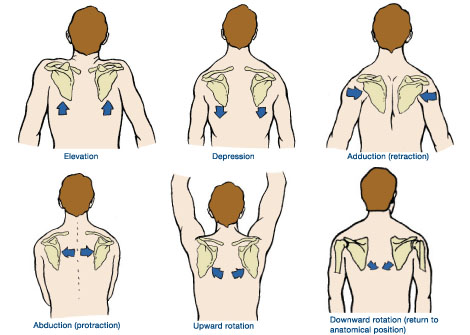
We train a lot of baseball players here at BBA, and part of our assessment is to see how their whole upper body work together during OH movements.  To ensure we get a good look at all the intricacies of this we have the athlete take their shirt-off and look at a few things

     Upper trap involvement
     Rib expansion
     Lumbar Extension
     Scapular movement, symmetry, resting position
     Clavicle Angle

(Photo: Acefitness.org)

Land and Decelerate

One of the biggest areas that we feel most athletes need to learn to do, is to learn how to land and stop.  We all want to build bigger engines and go faster and faster.  But if you don't have good breaks, then injury is inevitable.  We take a lot of time developing correct landing and deceleration mechanics in our athletes. 

We also do this in a number of different positions.  Athletics require eccentric control in a wide variety of positions, and we try to put athletes in as many different positions as possible so they can learn how to control their bodies no matter what. 

Landing and deceleration is where most non-contact injuries occur, and it's because athletes don't possess the control and/or correct postures/positions in these positions.  So while we often see ACL prevention program work on landing mechanics, it's often just linear, and don't often involve lateral, rotational, single leg, split stance positions that are so prevalent in athletics. 

Take a look at some ways we do this here at BBA.


Grandma Power Lifter


Down Syndrome Power Lifter


Prezi's

Check out our Prezi outlines we deliver to various organizations on various topics

     Training for Baseball
     Training for Golf
     Nutrition for Performance 
     Rest/Recovery Protocols
     Fundamentals of Athletic Performance

D-Rose

Derrick Rose claims to have added 5 inches to his vertical during his ACL rehab.  He already possessed an incredible vert before hand, and now 5 inches higher!?  Mike Robertson breaks down how this might be possible and how he would approach D-Rose's rehab.

http://robertsontrainingsystems.com/blog/derrick-rose-vertical-jump-program/


New Knee Ligament?

Interesting stuff here

http://www.sciencedaily.com/releases/2013/11/131105081352.htm


Go Get 'Em!